Est 2026 - Fundación Jesús Huerta de Soto

Est 2026 - Fundación Jesús Huerta de Soto

SCROLL TO EXPLORE

When the Architecture of Power Becomes Digital, the Question of Liberty Becomes Structural

The Youth Liberty Prize 2026 invites leading young minds globally to tackle the problem of digital interventionism through the lens of the Austrian School of Economics

Where The Global Youth Engage With The Future Of Economic Order

The 2026 Prize calls for original essays on “When the state writes the code: How does digital interventionism impact the prospect of Liberty?” - a structural shift in the mechanisms of state intervention as governance increasingly embeds itself within code, infrastructure, and digital systems.

Open to scholars worldwide under the age of 25, the Prize awards €170,000, including a first prize of €100,000 for outstanding scholarly work and original insights.

The three highest-ranked essays will be presented at the Madrid Annual Conference on Austrian Economics and published on the Liberty Prize website. Submissions are evaluated by a world renowned jury of experts according to originality, analytical depth, and clarity of argument.

Register Interest

The Competition

Serious Questions About Liberty Require a Strong Foundation

Freedom and liberty are often tossed around in debates as political rallying cries, as personal ideals, or casual opinions. But without a firm grasp of the underlying principles that make a free society function, these conversations stay surface-level and open to distortion. This competition is built on the belief that defending liberty demands more: a deep dive into its theoretical backbone, institutional pillars, and logical coherence. It's about understanding why free societies consistently outperform centrally planned ones, drawing on historical lessons to avoid repeating cycles of coercion that exact real human tolls: economic stagnation, eroded rights, and widespread suffering.

A Prize for Young Scholars Committed to Institutional Clarity

If you're under 25 and drawn to these ideas, this is your arena to explore why liberty isn't mere absence of control but a sophisticated order of institutions that emerge organically: private property, voluntary exchange, prices as signals, sound money, and the rule of law. These aren't abstract inventions; they arise from human action in a world of incomplete knowledge, uncertainty, and diverse goals. To speak responsibly about liberty, therefore, requires engaging with the theory that explains why these institutions work, how they come into being, and what happens when they are undermined.

The Austrian School of economics has made foundational contributions to this understanding, rooted in individual choices and values. It highlights private property's role in enabling economic calculations, the limits of centralised planning, and how interventions, however well-intentioned, generate unintended consequences, from distorted markets to reduced freedom and to stifled innovation and entrepreneurship. Think of it as a toolkit for analysing real-world issues without relying on oversimplified models or top-down illusions.

An Invitation to Rigorous Independent Thought

This annual prize isn't for superficial takes or advocacy; it's an invitation for young scholars like you to rigorously apply these principles to contemporary challenges, such as the 2026 theme on digital interventionism. We value intellectual independence, analytical sharpness, and a commitment to reasoned arguments.

The Theme

When the state writes the code: How does digital interventionism impact the prospect of Liberty?

The 2026 Challenge

A new form of state intervention is emerging, one that operates not through prohibitions or prescriptions, but through systems designed to shape choices before they are made. Central bank digital currencies that can be programmed to restrict spending. Digital identity frameworks that gate access to services. Algorithmic content moderation that removes speech without a hearing. Social credit systems that condition participation in economic life on compliance scores. Unlike traditional regulation, which punishes and deters, digital interventionism embeds control into infrastructure itself, often invisibly, automatically, and at scale.

A Structural Transformation in the Nature of Intervention

This marks a structural shift. When the government prints money recklessly, some distortions will eventually become visible, for example, in rising prices. When it censors a newspaper, the act is identifiable. But when compliance is coded into the architecture of payments, communication, and identity, intervention becomes the default and freedom becomes the exception that must be explicitly granted. In such cases, infrastructure designed to enable social interaction becomes a means of political control.

The dynamics are self-reinforcing. Digital interventionism tends to generate interventionist spirals. Initial regulations alter incentives and behaviour, producing new distortions that are then used to justify further controls. AI governance frameworks, ostensibly designed to ensure safety, risk centralising decisions that obstruct the entrepreneurial process of creating, discovering, and applying new knowledge.

The Austrian Analytical Framework

The Austrian School of Economics offers a uniquely powerful lens for this analysis. Its emphasis on dispersed knowledge, subjective value, and the impossibility of rational central planning illuminates precisely what digital interventionism threatens: the capacity of individuals to coordinate through voluntary exchange, price signals, and private property. Where designed systems presume that regulators can acquire the knowledge needed to coordinate and optimise outcomes, the Austrian tradition shows why this is impossible—and why attempts to do so generate consequences far beyond intention or foresight.

The Youth Liberty Prize 2026 invites sustained analysis of these developments through the analytical framework of the Austrian School of Economics. Its emphasis on dispersed knowledge, spontaneous order, and the limits of centralised design provides a rigorous basis for examining the economic and institutional consequences of digital governance.

This year's prize invites entrants to bring these principles to bear on any dimension of digital interventionism: freedom of expression and its suppression, programmable money and financial autonomy, digital identity and anonymity, AI regulation and the control of knowledge, or the broader institutional consequences of embedding political authority into code. 

Submissions may address, among other areas:

  • Central Bank Digital Currencies and Monetary Discretion

  • Digital identity systems and access to economic participation

  • Regulation of artificial intelligence

  • Content moderation and freedom of expression

  • The institutional implications of embedding political authority within code

The topic is inherently multidisciplinary, intersecting economics, law, political philosophy, computer science, and history. We encourage entrants to draw on these fields while grounding their analysis in the economic and institutional logic of liberty.

Register Interest

Awards & Recognition

2026 Prize Fund: €170,000

The Youth Liberty Prize 2026 recognises exceptional scholarship in political economy with an award of €170,000. The scale of the Prize reflects the seriousness of its purpose: to honour work that demonstrates intellectual originality, analytical depth, and sustained engagement with the institutional foundations of liberty.

Awards are granted outright and unconditionally. They do not constitute prior or subsequent funding of the awarded work, nor do they impose future obligations. The three highest-ranked authors are invited to present their essays at the Madrid Annual Conference on Austrian Economics at Rey Juan Carlos University on 21-23 October 2026. Travel expenses to Madrid are reimbursed upon submission of supporting documentation. The top ten essays are also published on the Liberty Prize website.

1st

€100,000

Presentation at the Madrid Annual Conference; publication on the Liberty Prize website; travel reimbursement

2nd

€25,000

Presentation at the Madrid Annual Conference; publication on the Liberty Prize website; travel reimbursement

3rd

€10,000

Presentation at the Madrid Annual Conference; publication on the Liberty Prize website; travel reimbursement

4-10

€5,000 (€35,000 total)

Formal recognition and essay published on the Liberty Prize website

11-50

Website Mention

Special mention on the Liberty Prize website

The Jury

Assessment by an International Panel of Scholars and Experts

The Youth Liberty Prize 2026 is evaluated by a panel of renowned international scholars and experts. The jury brings together academic experience in economic theory, institutional analysis, and the study of spontaneous order. Their role is not to reward opinion, but to assess disciplined argument.

Each submission is examined according to defined scholarly criteria: originality, depth of Austrian analysis, clarity of reasoning, and relevance to the annual theme. Evaluation reflects the standards of serious academic inquiry. The jury’s decisions are final.

Prof. Jesús Huerta de Soto

World-leading figure of the Austrian School of Economics, known for his defence of the ideas of liberty and anarcho-capitalism

Prof. Jesús Huerta de Soto

Jesús Huerta de Soto Ballester is one of the world's foremost contemporary representatives of the Austrian School of Economics and anarcho-capitalist thought. He is Professor of Political Economy at Rey Juan Carlos University in Madrid, where his teaching and research center on dynamic efficiency, entrepreneurship, capital and monetary theory, business cycles, and the impossibility of socialist calculation under statism.

His major works include:

  • Money, Bank Credit, and Economic Cycles (4th ed., Ludwig von Mises Institute, 2020)
  • Socialism, Economic Calculation and Entrepreneurship (Edward Elgar, 2010)
  • The Theory of Dynamic Efficiency (Routledge, 2009)
  • The Austrian School: Market Order and Entrepreneurial Creativity (Edward Elgar, 2008)
  • Statism and the Economy: The Deadliest Virus (Routledge, 2024)
  • Lectures on Austrian Economics, Vols. I & II (Palgrave Macmillan, 2024)

His books and articles have been translated into 21 languages. He has played a pivotal role in advancing Austrian economics globally, founding the journal Procesos de Mercado, establishing the only full EU-valid Master's and Doctoral programs in Austrian Economics, and creating the Fundación Jesús Huerta de Soto Ballester to support international research in Austrian theory and anarcho-capitalism. Among his many intellectual disciples is Argentine President Javier Milei.


Awards and honors include the Rey Juan Carlos International Prize in Economics (1983, presented by H.M. the King of Spain), the Orden de Mayo al Mérito (Argentina, 2025), Adam Smith Award (Brussels, 2005), Franz Cuhel Memorial Prize (Prague, 2006), Gary G. Schlarbaum Prize for Liberty (2009), multiple honorary doctorates (including Universidad Francisco Marroquín 2009, Alexandru Ioan Cuza 2010, Financial University Moscow 2011, ESEADE Buenos Aires 2025, Universidad Nacional Mayor de San Marcos Lima 2026), Hayek-Medaille (2013), Juan de Mariana Award (2016), Escuela de Salamanca Award (2018), and Faro de la Libertad Award (2025).


As jury chair, Huerta de Soto brings unparalleled authority on monetary intervention, spontaneous order, and the institutional dangers of statism, perfectly aligned with analyzing digital interventionism's consequences.

Prof. Philipp Bagus

Leading Austrian economist, Milei biographer and co-founder of the Milei Institute

Prof. Philipp Bagus

Philipp Bagus is Professor of Economics at the Universidad Rey Juan Carlos in Madrid. His research focuses primarily on monetary theory and Austrian Business Cycle Theory, as well as the political economy of money, financial crises, and state intervention. He has published in leading international journals including the Journal of Business Ethics, The Independent Review, the American Journal of Economics and Sociology, and the Business Ethics, the Environment & Responsibility.

His scholarly work has been recognized with numerous awards, among them the O.P. Alford III Prize in Libertarian Scholarship, the Sir John M. Templeton Fellowship, the IREF Essay Prize, and the Ludwig-Erhard-Förderpreis für Wirtschaftspublizistik. He also received the Ron Paul Liberty in Media Award.
Bagus is the author of several widely translated books. His work The Tragedy of the Euro has appeared in fourteen languages and has become a standard reference in debates on European monetary integration. Together with David Howden, he co-authored Deep Freeze: Iceland’s Economic Collapse, an analysis of the Icelandic financial crisis. In collaboration with Andreas Marquart, he published Warum andere auf ihre Kosten immer reicher werden … und welche Rolle der Staat und unser Papiergeld dabei spielen and Wir schaffen das – alleine. In September 2024, his book Die Ära Milei was released, examining the ideas of Argentina’s president Javier Milei.

Beyond monetary economics, Bagus has engaged extensively with questions of culture, public discourse, and state influence on opinion formation. His research includes work on cancel culture and institutional pressures on free expression. He has served as an expert witness to the German Bundestag on the digital euro, contributing to the debate on central bank digital currencies and monetary sovereignty.

Bagus is a member of the Mont Pelerin Society, the Hayek-Gesellschaft, and the Property and Freedom Society. He serves on the Scientific Advisory Board of the Ludwig von Mises Institut Deutschland and the Liberales Institut (Switzerland), is Senior Fellow of the Ludwig von Mises Institute (USA), and is an academic member of the Instituto de Estudios Históricos Bances y Valdés.
He joins the jury with deep expertise in monetary economics, the theory of economic coordination under decentralized decision-making, and the institutional foundations of free societies.

Joana Cotar

German politician, co-founder of the Milei Institute Germany and the "Bitcoin in the Bundestag" initiative

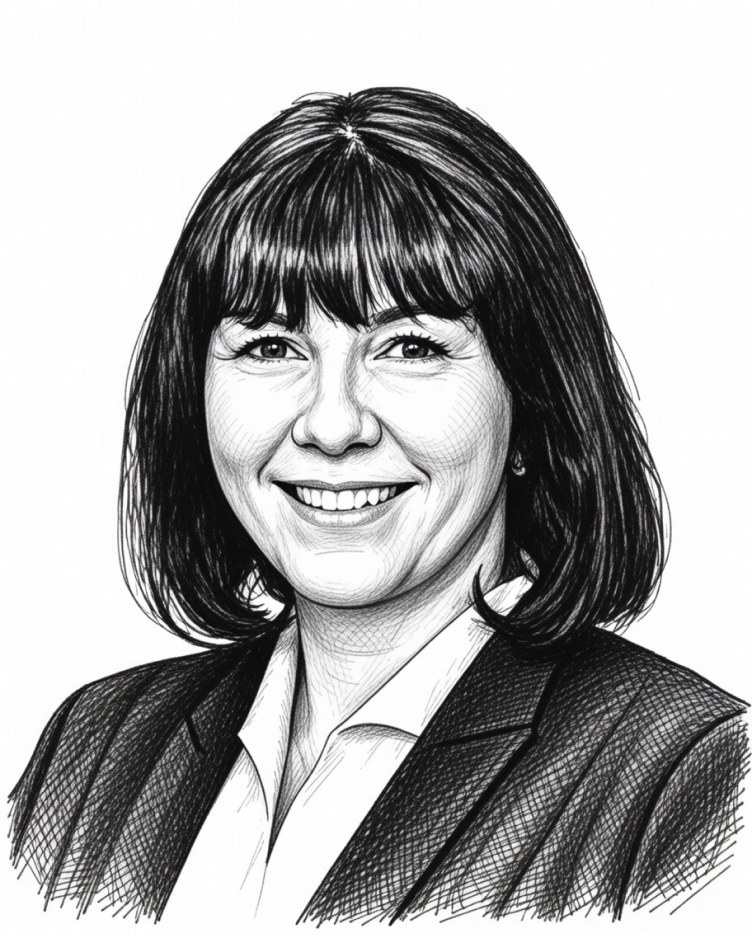
Joana Cotar

Joana Cotar is a former Member of the German Bundestag, entrepreneur and bestselling author whose work sits at the intersection of technology, monetary reform and civil liberties. Over eight years in the federal parliament, she operated at the center of legislative decision-making in Europe’s largest economy, gaining firsthand insight into the mechanics of political power and regulatory expansion.


In parliament, Cotar became a leading voice for digital innovation and monetary sovereignty. She founded the initiative “Bitcoin im Bundestag”, bringing the debate on decentralized currencies and open monetary networks directly into the German legislature. At a time when central bank digital currencies and expansive financial regulation were gaining momentum, she argued for technological neutrality, competition in currencies, and financial self-determination.


Following her parliamentary career, Cotar co-founded the Milei Institute for Deregulation in Europe, a think tank dedicated to reducing bureaucratic barriers, strengthening property rights, and advancing pro-market reform across the continent.


Cotar is the founder and managing director of 21 Atlas GmbH, a strategic advisory firm, and a member of the Hayek Society.


As a bestselling author of "Inside Bundestag", she provides a rare insider account of parliamentary life and the erosion of trust in democratic institutions. The book combines personal experience with institutional analysis, examining how centralized power and political incentives shape outcomes often detached from public rhetoric.

Cotar is an outspoken advocate for freedom of speech, digital rights, and individual autonomy, she regularly speaks on issues ranging from civil liberties and digital identity systems to monetary competition and the expanding reach of state power.


She joins the jury with deep legislative experience, entrepreneurial perspective, and a principled commitment to open systems, decentralized technologies, and the preservation of individual liberty in Europe’s evolving digital landscape.

Sir Prof. Niall Ferguson

World-renowned historian, economist, editor, columnist and best-selling author

Sir Prof. Niall Ferguson

Sir Niall Ferguson is a British-American historian, the Milbank Family Senior Fellow at Stanford's Hoover Institution, and a senior faculty fellow at Harvard's Belfer Center for Science and International Affairs. He holds BA, MA, and DPhil degrees from Oxford's Magdalen College (First Class Honours). His academic career includes posts at Cambridge (Christ's and Peterhouse Colleges), Oxford (Jesus College, Professor of Political and Financial History), NYU Stern (Herzog Chair), and Harvard (Laurence A. Tisch Professor of History 2004–2016, William Ziegler Professor at Harvard Business School). He is currently a visiting professor at the London School of Economics.

Ferguson has authored 16 books, including Paper and Iron (short-listed for History Today Book of the Year), The Pity of War (1998, on WWI), The House of Rothschild (short-listed for Jewish Quarterly/Wingate and American National Jewish Book Awards), Empire (2003, on British imperialism), The Ascent of Money (2008, financial history), Civilization (2011), The Great Degeneration (2012), Kissinger, 1923-1968: The Idealist (2015, Council on Foreign Relations Arthur Ross Prize), The Square and the Tower (2018, NYT bestseller on networks), and Doom: The Politics of Catastrophe (2021, short-listed for Lionel Gelber Prize). He is completing Kissinger, 1969-2023: The Player. As a filmmaker, he won an international Emmy for PBS's The Ascent of Money and adapted The Square and the Tower as Niall Ferguson’s Networld.

He was a Bloomberg Opinion columnist (2020–2024), now writes for The Free Press, and is a CBS News contributor. Ferguson founded and manages Greenmantle LLC (a geopolitical advisory firm), co-founded Ualá (a Latin American fintech), and is a founding trustee of the University of Austin. Awards include the Hayek Prize for Lifetime Achievement (2012), Benjamin Franklin Prize for Public Service (2010), Wadsworth Prize for Business History, Honorary Fellow of the Royal Society of Edinburgh (2020), and a knighthood in King Charles III's 2024 Birthday Honours for services to literature. He became a naturalized US citizen in 2018.

Ferguson joins the jury with a profound historical perspective on empires, networks, and catastrophic interventions, vital for dissecting digital statism's erosion of liberty through surveillance, censorship, and centralized control in the 2026 theme.


Prof. Tom Ginsburg

World-leading scholar of constitutional law, and founder of the Chicago Forum for Free Inquiry and Expression

Prof. Tom Ginsburg

Tom Ginsburg is a Leo Spitz Distinguished Service Professor of International Law, Ludwig and Hilde Wolf Research Scholar, and Professor of Political Science at the University of Chicago. He holds BA, JD, and PhD degrees from the University of California at Berkeley.

Ginsburg specializes in comparative and international law through an interdisciplinary lens, emphasizing constitutional design, democratic transitions, and the role of law in authoritarian contexts.

He co-directs the Comparative Constitutions Project, which catalogs and analyzes every constitution written since 1789, informing global reform efforts. His books include Democracies and International Law (2021), exploring law's role in global governance; How to Save a Constitutional Democracy (2018, co-authored), a prescient warning on democratic erosion; and Judicial Review in New Democracies (2003), examining courts' stabilizing function in emerging systems, all earning best book prizes from the American Political Science Association.

Before academia, he served as legal adviser at the Iran-US Claims Tribunal in The Hague. He has consulted on constitutional and legal reforms for international organizations and governments worldwide, and is an elected member of the American Academy of Arts and Sciences.

Ginsburg joins the jury with authoritative insights into constitutional law, international norms, and the institutional safeguards of liberty, critical for assessing how digital interventionism threatens democratic structures, anonymity, and rule of law in the 2026 theme.

Prof. David Howden

Leading Austrian Economist focused on business cycles, banking reform, and free-market alternatives

Prof. David Howden

David Howden is Professor of Economics at Saint Louis University's Madrid Campus, where he also serves as Associate Dean of the Department of Business and Economics. His research focuses on monetary theory, Austrian Business Cycle Theory, and the economics of banking and financial crises, including the ethics of financial intermediation, banking contract theory, and Austrian capital theory applied to modern financial markets. His comparative analysis of the Icelandic and Irish banking crises has shaped debates on sovereign debt and deposit insurance reform.

He has published in journals such as Journal of Business Ethics, The Independent Review, American Journal of Economics and Sociology, Journal of Banking Regulation, Review of Austrian Economics, and Quarterly Journal of Austrian Economics. Distinctions include the O.P. Alford III Prize in Political Economy (2016, 2017), Gary G. Schlarbaum Prize from the Ludwig von Mises Institute, Franz Čuhel Memorial Prize from the CEVRO Institute in Prague, and First Place in the Don Lavoie Memorial Graduate Student Essay Competition.

Howden has authored and edited numerous books, including Deep Freeze: Iceland's Economic Collapse (co-authored with Philipp Bagus), The Fed at One Hundred (co-edited with Joseph T. Salerno, Springer), Institutions in Crisis (Edward Elgar), and the two-volume The Emergence of a Tradition: Essays in Honor of Jesús Huerta de Soto (Palgrave Macmillan). He serves as Series Editor of Palgrave Studies in Austrian Economics.

He is a Fellow of the Ludwig von Mises Institute, Senior Academic Fellow of the Cobden Centre in London, Associate Editor of the Quarterly Journal of Austrian Economics, and Deputy Director and Associate Editor of Procesos de Mercado: Revista Europea de Economía Política. A regular in public debates, he has appeared on BBC Radio 4 and written for the Mises Institute, Cobden Centre, Institute of Economic Affairs, and Adam Smith Institute, with work translated across Europe and Latin America.

Howden joins the jury with deep expertise in monetary theory, Austrian business cycle analysis, and the ethics and institutional design of banking and credit—essential for scrutinizing digital interventionism's impacts on financial autonomy and economic coordination.

Prof. Miguel Ángel Alonso Neira

Leading influential and well-published Austrian Economist

Prof. Miguel Ángel Alonso Neira

Miguel Ángel Alonso Neira is a Spanish economist and professor of economics at Universidad Rey Juan Carlos in Madrid. His academic work focuses on macroeconomics, monetary theory, economic growth, and the institutional conditions that shape long-term prosperity.

A scholar associated with the Austrian School tradition,  Neira has contributed to research on business cycles, fiscal policy, and the structural drivers of economic stability. His work combines rigorous economic analysis with a broader interest in the philosophical and institutional foundations of market economies.

Beyond his research, he is actively involved in postgraduate teaching and international academic programmes, helping to advance the study of monetary economics and classical liberal thought in Europe and Latin America.

He joins the jury with strong expertise in macroeconomic analysis, institutional economics, and the theoretical underpinnings of sustainable growth and financial stability.

Alexander Tamas

International investor and entrepreneur linking libertarian thought with the global technology sector

Alexander Tamas

Alexander Tamas is a technology investor and philanthropist whose career has focused on high-impact investments in transformative companies that redefine industries and challenge centralised systems. As co-founder of Vy Capital, the firm has led investments in pioneering firms including SpaceX, xAI, Neuralink, Cerebras, Reddit, Zomato, The Boring Company, Neros, and other ventures that embody entrepreneurial discovery and innovation.


Prior to Vy, Tamas was a founding partner at DST Global, where he sourced and led landmark investments in global platforms such as Facebook (now Meta), Airbnb, Spotify, Twitter (now X), JD.com, Alibaba, Xiaomi, and Zalando. Earlier, he honed his expertise in technology investment banking at Goldman Sachs in London.


Beyond investing, Tamas has co-founded the data science company Synaptic and the longevity firm Biograph, and has spearheaded philanthropic initiatives in academia, the arts, and science. These include the Alexander Tamas Fellowship at Oxford's Future of Humanity Institute, a neuroscience research institute at Imperial College London, "The Institute" in San Francisco, and ongoing support for the Fundación Jesús Huerta de Soto Ballester in Madrid. He has actively shaped high-level discussions on AI development, regulatory frameworks, and global standards, bridging policy, academic, and philanthropic spheres to advocate for innovation that preserves individual freedom.


Tamas joins the jury with deep expertise in free speech, drawn from his investments in the world's most influential digital platforms, and a profound grasp of AI's economic and societal impacts.

Eligibility & Requirements

Participation in the Youth Liberty Prize 2026 is subject to the following criteria.

Eligibility

  • Applicants must be under 25 years of age as of 30 November 2026

  • This competition is open to applicants of all nationalities

  • Essays must be written in English

  • Entrants under 18 years of age must submit a signed Parental or Guardian Consent Form alongside their entry

Essay Requirements

  • Essays should be between 2,000 and 3,000 words

  • Submitted in PDF format

  • Original, unpublished work

  • Artificial intelligence tools can be used for research, but not for writing the essay

Applicants must upload identification, a brief CV (maximum 150 words), and the required declarations at the point of submission.

Full details are set out in the Competition Rules below along with the Parental or Guardian Consent Form and a suggested Reading List.

Competition Rules

Parental or Guardian Consent Form

Reading List

Register Interest

Timeline

Registration Opens

09.03.26

Submissions Close

30.06.26

Winners Announced

15.09.26

Awards Ceremony

22.10.26

The deadline for submitting applications will be 8:00 p.m. CET on 30 June 2026. Essays may be submitted only during the official submission period. Applications received outside this window will not be considered.

Register Your Interest

Register to Participate in the 2026 Competition

Preparing to Submit Your Work

Registration allows prospective applicants to remain informed about the 2026 Prize and the formal submission process. Those who register will receive updates relating to key dates, guidance on eligibility, and reminders as the June submission deadline approaches.

Registration does not constitute submission. Essays must be submitted before 8:00 p.m. CET on the 30 June 2026, through the designated Online Portal and in accordance with the Competition Rules.

Registration Details

Your registration could not be saved. Please try again.
Thank you for registering your interest!
Afghanistan Albania Algeria Andorra Angola Antigua and Barbuda Argentina Armenia Australia Austria Azerbaijan Bahamas Bahrain Bangladesh Barbados Belarus Belgium Belize Benin Bhutan Bolivia Bosnia and Herzegovina Botswana Brazil Brunei Bulgaria Burkina Faso Burundi Cabo Verde Cambodia Cameroon Canada Central African Republic Chad Chile China Colombia Comoros Congo, Democratic Republic of the Congo, Republic of the Costa Rica Côte d’Ivoire Croatia Cuba Cyprus Czech Republic Denmark Djibouti Dominica Dominican Republic Ecuador Egypt El Salvador Equatorial Guinea Eritrea Estonia Eswatini Ethiopia Fiji Finland France Gabon Gambia Georgia Germany Ghana Greece Grenada Guatemala Guinea Guinea-Bissau Guyana Haiti Honduras Hungary Iceland India Indonesia Iran Iraq Ireland Israel Italy Jamaica Japan Jordan Kazakhstan Kenya Kiribati Kuwait Kyrgyzstan Laos Latvia Lebanon Lesotho Liberia Libya Liechtenstein Lithuania Luxembourg Madagascar Malawi Malaysia Maldives Mali Malta Marshall Islands Mauritania Mauritius Mexico Micronesia Moldova Monaco Mongolia Montenegro Morocco Mozambique Myanmar Namibia Nauru Nepal Netherlands New Zealand Nicaragua Niger Nigeria North Korea North Macedonia Norway Oman Pakistan Palau Palestine Panama Papua New Guinea Paraguay Peru Philippines Poland Portugal Qatar Romania Russia Rwanda Saint Kitts and Nevis Saint Lucia Saint Vincent and the Grenadines Samoa San Marino Sao Tome and Principe Saudi Arabia Senegal Serbia Seychelles Sierra Leone Singapore Slovakia Slovenia Solomon Islands Somalia South Africa South Korea South Sudan Spain Sri Lanka Sudan Suriname Sweden Switzerland Syria Taiwan Tajikistan Tanzania Thailand Timor-Leste Togo Tonga Trinidad and Tobago Tunisia Turkey Turkmenistan Tuvalu Uganda Ukraine United Arab Emirates United Kingdom United States Uruguay Uzbekistan Vanuatu Vatican City Venezuela Vietnam Yemen Zambia Zimbabwe